In the late 16th century, Spain, under King Philip II, emerged as the era’s dominant force, riding high on the wealth acquired from its religious crusades in South America, and imposing the Catholic faith while plundering gold. Conversely, Elizabeth I of England was a constant irritant for Philip, fostering a Protestant, piratical, and relatively impoverished nation. Encouraging figures like Francis Drake to intercept Spanish treasures was part of her bigger plan to keep Spain at bay, albeit a risky maneuver that walked a fine line between diplomacy and aggression.
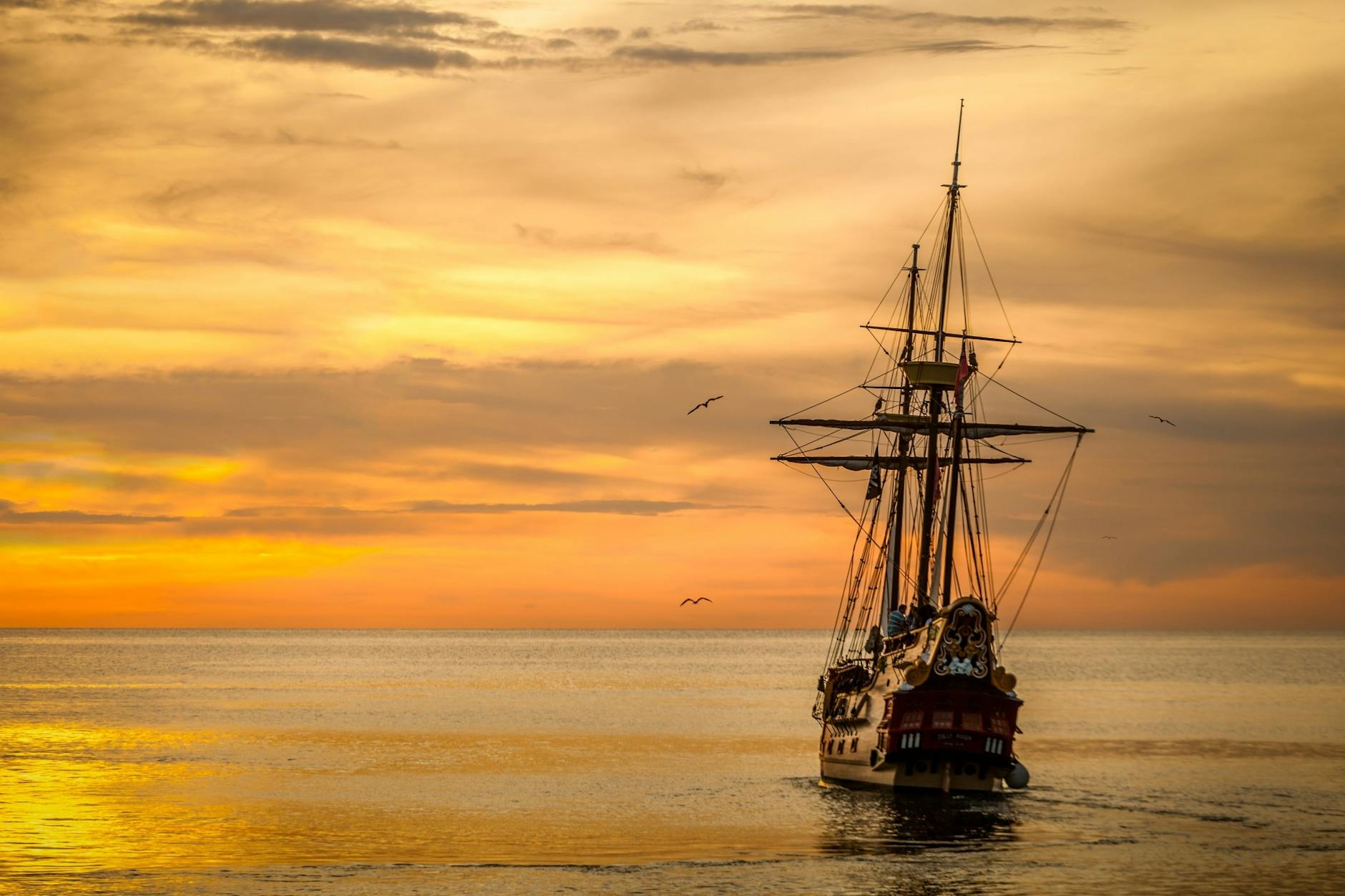
A Sea of Troubles
Elizabeth’s reign was marked by a complex dance of provocation and politics against Spain, a scenario that eventually culminated in the execution of Mary Queen of Scots, setting the stage for a direct confrontation. Philip, already irked and prepared, set an ambitiously large invasion plan into motion, aiming to unite his forces by escorting an army across the English Channel. Despite England’s apparently precarious position, lacking a standing army to match Spain’s seasoned soldiers, its naval innovations and strategic use of the sea and its ships under Elizabeth’s rule would soon challenge Spanish dominance.
Revolutionizing Naval Warfare
England’s answer to the looming threat was not in manpower but in maritime innovation. The English warship underwent a radical design overhaul, adopting a more streamlined and lower-hulled form known as “race-built.” This architectural evolution, paired with advancements in rigging techniques, significantly enhanced speed and maneuverability, offering a stark contrast to the bulky and towering Spanish galleons. This gave the English fleets a crucial edge over the Spanish Armada, demonstrating that in the age of sail, the design and functionality of ships could change the course of history.
The Battle Against Odds
When the Spanish Armada sailed into the English Channel, it was a force to be reckoned with, yet, the English had prepared well. Despite the Spanish Armada’s imposing presence, the English utilized a network of beacons to swiftly communicate the invasion’s onset across the country, mobilizing resistance with surprising speed. Yet, the ultimate battle between these two naval powers would be dictated not just by manpower, nor by the might of ships alone, but significantly by the unpredictable nature of the sea and weather.
The Wrath of the Weather and the Sea
Ultimately, the fate of the Spanish Armada was not solely decided by the confrontation with the English fleet but was significantly influenced by the capricious nature of the North Atlantic weather. Historical records and modern reconstructions have shown how the Spanish fleet, though initially favored by the weather, found themselves at a disadvantage as conditions worsened. The mighty Armada, once thought invincible, was scattered by storms, with segments of the fleet wrecked on the coasts of Ireland and Scotland.
This turn of events highlighted not only the limitations of human prowess against nature’s forces but also pointed to a colossal error in navigation. Unknown to the Spanish, the Gulf Stream, a powerful transatlantic current, played a pivotal role in their misfortune. Misjudging their position and the impact of this current led many Spanish ships disastrously off course, directly contributing to the Armada’s failure.
Conclusion
The saga of the Spanish Armada serves as a fascinating chapter in maritime history, providing valuable lessons on the intersection of human ambition, technological innovation, and the elemental force of nature. Despite the considerable might vested in the Armada, it was the combination of English naval ingenuity and the unpredictable Atlantic weather that ultimately dictated the outcome of this historic encounter. The story serves as a testament to the complex interplay between human endeavors and the environment, reminding us of the ocean’s indomitable force and the humble place of humanity within it.
 RiffRamble
Leave a comment